


















43 days. From October 1 to November 12, the government was shut down.. This 2025 shutdown is the longest in United States history. The second longest government shutdown lasted 34 days; from December, 2018 to January 2019 during President Trump’s first term. But why did the government shut down? And, most importantly, what effects does it have on the nation?
Every year, Congress must agree on a federal budget to send to the president. Both Houses of Congress are currently controlled by the Republican, meaning the bill is more likely to reflect a budget they desire. However, Democrats with the Senate are fighting backing on some factors of the budget. These Democrats want the budget to make health insurance less expensive for Americans; reverse cuts to Medicaid, a government healthcare that supports the disabled, low-income, and elderly people; and remove proposed spending cuts to other government healthcare organizations. Because Republicans and Democrats in the Senate cannot agree on how the budget should be spent, the government has been put on shutdown until they come to a compromise.
The government shutdown has taken a tremendous toll on federal workers. About 630,000 federal workers have been furloughed, meaning they are prohibited from working and receive no pay. Only essential federal employees, including Transport Security Administration (TSA) officers, Customs and Border Protection (CBS) officers, military personnel, and active duty guards and personnel, are able to work but do not receive pay. More than 730,000 essential federal employees are working without pay. The only federal workers that are allowed to work and get paid are lawmakers, Supreme Court and federal court judges, and political appointees confirmed by the Senate.
There have been people who have helped pay some of the essential federal workers. On October 24th, an anonymous donner gave $130 million to the Pentagon to pay for U.S. troops. Despite this massive donation, the funds only amount to about $100 per service member.
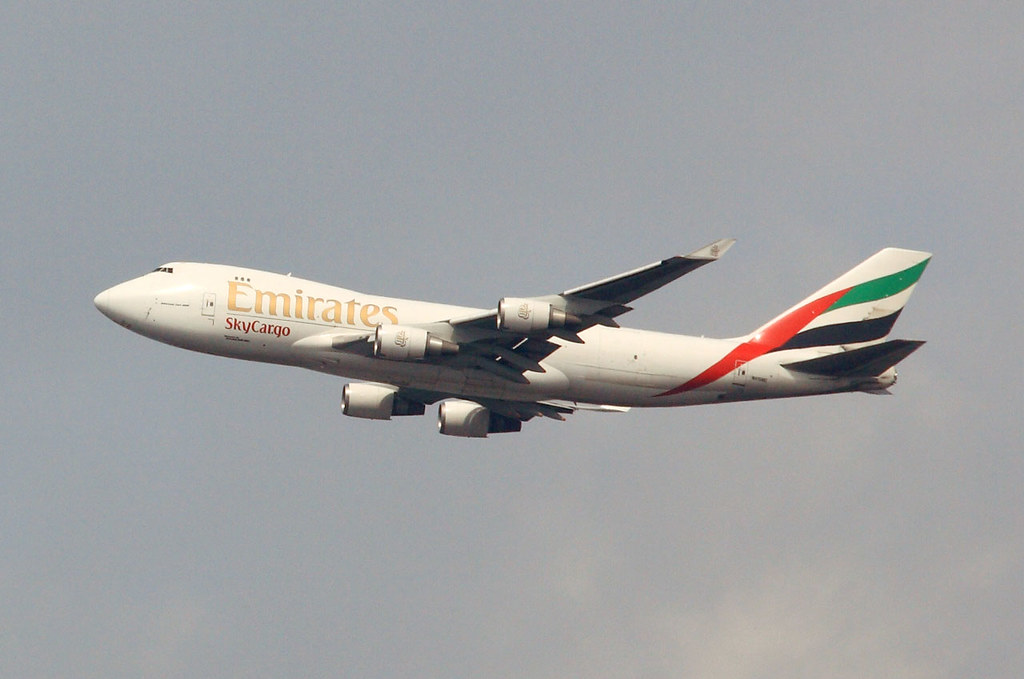
Because of the government shutdown, several services and organizations vital to Americans have stalled or gone out of service. Because air traffic controllers and TSA officers are receiving no pay, many are refusing to work, causing massive amounts of flight delays and cancellations. Between October 25 through October 27, 19,000 flights were delayed and 1,600 were canceled due to air worker shortage.
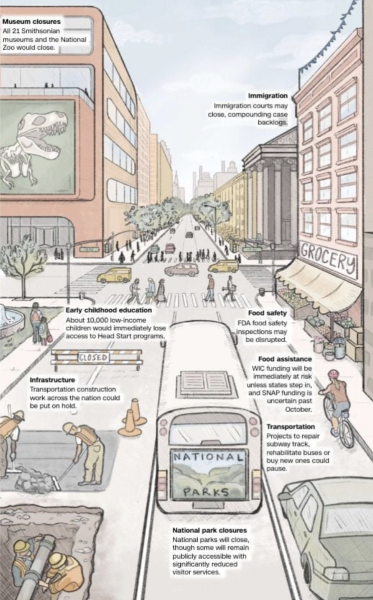
Other programs and organizations impacted by the government shutdown, including the Smithsonian Museums and National Parks, are displayed on this image:
The shutdown has created devastating impacts the government is still trying to resolve today. Since November 1st, the Supplemental Nutrition Assistance Program (SNAP), run by the U.S. Department of Agriculture (UDSA) stopped giving out federal food aid. 1 in 8 Americans rely on this program to buy groceries. The USDA’s reason: “the well has run dry”. Many states are attempting to issue this aid using emergency funds, with 19 states issuing full benefits and 18 issuing partial benefits.
Despite the end of the longest government shutdown in United States history, U.S. citizens are still dealing with the lasting repercussions.
Sources Used:
https://www.bbc.com/news/articles/crrj1znp0pyo
https://carbajal.house.gov/shutdown/#FedEmployees
https://www.cnn.com/2025/10/22/politics/who-gets-paid-during-shutdown
https://thehill.com/regulation/transportation/5564446-flight-delays-cancellations-shutdown-pressure/
https://www.foxnews.com/politics/5-longest-government-shutdowns-history-what-happened-how-ended
https://www.wthitv.com/news/what-happens-if-the-government-shuts-down-an-illustrated-guide/article_c6cb6706-a454-5e39-9925-f1fcd8e7f284.html
https://www.cbsnews.com/news/federal-food-aid-govenrment-shutdown/
https://www.bbc.com/news/articles/c891p1pez42o
https://thehill.com/homenews/5603047-snap-benefit-restoration-shutdown/